How Microsoft Partners Build High-Trust Partnerships That Scale Globally
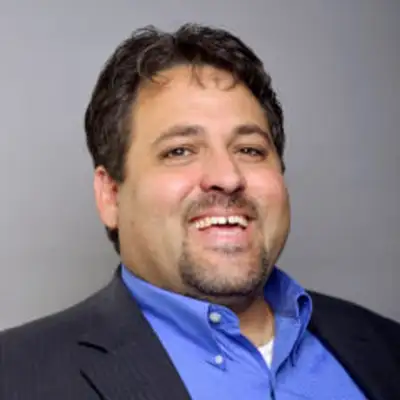
Welcome to IAMCP Profiles in Partnerships, the podcast that showcases how Microsoft Partners and IAMCP members boost their business by collaborating with other members and partners. I'm your cohost, Anthony Carrano. And in each episode, we sit down with some of the most innovative and successful partners in the Microsoft ecosystem to uncover how they're scaling, differentiating, and building trust driven partnerships that accelerate growth. The International Association of Microsoft Channel Partners, otherwise known as IAMCP, is a global community where Microsoft partners connect, collaborate, grow. So whether you're looking for new customers, new markets, or new solutions, IAMCP gives you access to the relationships and resources that make it possible.
Anthony Carrano:In this show, we go beyond theory. We explore real world partnership stories, proven frameworks, and the practical strategies that increase customer loyalty and revenue. If you're a Microsoft partner who wants to grow smarter, not just bigger, you're in the right place.
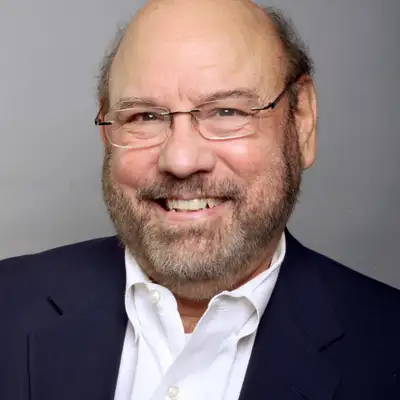
Anthony Carrano:Before we dive in today's conversation, let me ask you a couple of questions. Are your partnerships structured for scale or are they still built around one off opportunities? And if another partner asked, why should I partner with you? Would your answer be truly differentiated? In today's episode, we're talking about how to move from opportunistic partnering to a high trust scalable framework that enables international expansion, AI driven solutions and measurable business impact. We're joined with Paul Solski, Managing Director at AIM International, an international business development organization which enables software companies to accelerate their business growth into new markets. If you've ever wondered how to build partnerships that last and actually grow revenue, this episode is for you. Let's get into it.
Anthony Carrano:Well, Paul, welcome to the show. It's good to see you again.
Paul Solski:It's a pleasure to be here, Anthony.
Anthony Carrano:Excellent. Excellent. Well, for those who, you know, don't know you, I know as Mr. IAMCP, tell us a little bit about yourself and your role, you know, with AIM.
Paul Solski:Oh sure, sure. So a little bit of background, I grew up in Australia. I worked in Singapore looking after the Asia Pacific Region, and then came to The US and looked after worldwide. At a number of companies: Intel, Compaq, HP and Microsoft. It was Microsoft that brought me to Seattle where we are right now.
Paul Solski:And I just had this wonderful opportunity to see many cultures, many ways of going to market, understanding to, what place I would have in a different culture, and then just get an exposure into all of these companies and all of these markets. So when it came to starting AIM, my goal was to take all of those learnings and apply them into a method of helping partners to grow into an international market. So that's what I've been focusing on.
Anthony Carrano:Excellent. And how long has AIM been in existence?
Paul Solski:Well, we started in 2008 and so what happened was when I was at Microsoft I built a program called the Cross Border Programme, which has now morphed into the Geo Expansion Programme. And then when I left Microsoft, I decided to start AIM to do that exclusively because the demand has been so great for helping partners to expand. So 2008.
Rudy Rodriguez:Well, Paul, this is a I'm really looking forward to the story that you're about to tell us. So, you know, in this partner showcase that we're about to discuss, can you tell us a little bit about the client? You you don't have to give us a name, we would like to know a little bit about the size and industry and what challenges they were facing.
Paul Solski:Yeah, sure. Thanks Rudy for asking that. So we recognise that there are growth stages for partners, and it's usually creating a solution, testing the solution, and being successful in domestic market. But after a while, the way to get a return on investment is to scale out the business. So, sooner or later, the need to go international comes up.
Paul Solski:And the thing is, it's both an art and a science in the way that can be undertaken. And we like to divide it into three stages. The first stage being when, the second being where, and the third being how. And there are specific activities that need to be undertaken in that area in order to be able to scale sales internationally. Also, the different types of models and also the different engagement with either Microsoft or partners or directly. So each of these companies had the challenge of how to scale their business internationally, and that's where we came to apply our expertise.
Rudy Rodriguez:Well, since we are discussing a P2P showcase, we all know award winning collaborations don't happen by accident, right? So, what specific practices, frameworks, and agreements did you put into place to make this partnership thrive?
Paul Solski:Yeah, so there are several stages of the journey. The first is being successful in your home market and ensuring that the partner can compete effectively against international ones. And then it's deciding what is the go to market model. And there are typically three: direct to customer, through partners or with partners, or co selling with Microsoft. By far, most Microsoft partners expand internationally through other partners, through a network of other partners.
Paul Solski:So we have a methodology that we've been using for employers since 2008. And there are four stages to it. Prospecting, which means finding the right partners, partners that will engage with you and become self sufficient and proactive. Secondly, it's recruiting partners. And recruiting partners is about presenting a compelling business case, why another partner should partner with you.
Paul Solski:Activating, which is training and building go to market plans, and then growing, which is taking the learnings from the initial year of jointly going to market together and applying those learnings to scale out even further across more industries and more customers. So prospect, recruit, activate, grow is the framework that we've been using.
Anthony Carrano:Yeah, no, that's great. And Paul, I mean, I love just with your vast perspective on partnering. What have you found like in your experience? Like what does high trust networking look like in practice? And how do you measure or not whether it's working?
Paul Solski:Right, great question. So I think the majority of partnering events take place as a reaction to an opportunity that comes up. And what happens is one partner comes across an opportunity at an existing customer or potential customer, and they realise they don't have the full spectrum of expertise they need to have in order to deliver that solution. So they look for another partner to help fill the gaps. And many times they find that other partner, and together on a ad hoc opportunity by opportunity basis, they engage and work together, and hopefully it works out.
Paul Solski:But I think what we're trying to do is firstly ensure that there is a framework around partnering that will be on a consistent and repeatable basis, so that the two partners come together first and look at the market, look at what they can offer, look at the problems that they can solve, and then plan on how to go after those customers that would benefit from these joint solutions. And that's a very different way of looking at partnering, from ad hoc to structured and planned, so that it benefits both organisations and scales. And then the next step is to have multiple partners involved, and have a greater depth of solutions. And in Seattle, we have a group of eight partners. When I say Seattle, I mean the IAMCP Seattle chapter.
Paul Solski:We have a group of eight partner organisations who've come together to create joint solutions, and we've identified 35 solutions that they're now taking to market.
Anthony Carrano:Yeah, we interviewed them on an earlier episode, and so that was definitely fun and engaging, and for those who are listening to this one who aren't familiar with the group Paul's referring to, we'll drop in the show notes a link to that episode as well, so.
Paul Solski:And Anthony, if I may add, the high trust part of it comes in when partners or group of partners come together and acknowledge that it's not a transaction, opportunistic transaction, it's we want to get to know each other, we want to ensure that our cultures and visions are compatible. And then when we work together, we realise sometimes we give and sometimes we receive as well, as opposed to what's in it for me. And that's when people start sharing. In this particular group, we actually have partners that overlap with expertise, and yet they find ways to stay in their own way. So it's a mindset, a mindset of mutual win win.
Anthony Carrano:You know, I'm gonna kind of, I'd like to, you know, there's a question just to kind of piggyback off that one where you're talking about with, you know, as their partners and you're building multiple partnerships, and you said, like, just like within your group, and you don't have to talk specifically about the, you know, the the Seattle group, but just maybe in in general, what do you advise or what have you seen to work well when partners, when maybe they have there's areas of differentiation, but when they have areas of overlap, and if sometimes maybe they start encroaching on each others, whether it's advice or best practices, things that you've seen to say, hey, look, for the sake of the partnership, when you start seeing that encroachment happen, what are maybe some of the best ways to handle that so the partnership can just continue to be healthy going forward?
Paul Solski:Yeah, you know what? Sometimes it's good that they do overlap, And particularly in this scenario where you may have a partner in The US with a customer that's global, and they need the same kind of services and expertise in another country. So you would actually look for a partner that has the same expertise. But more specifically to your question, I think it's all about goodwill and trust that we build, that it's not always one partner winning, that it's give and take. And what I found with this group that we have is that people agree to stay in their lanes, depending on who's best suited to provide that part of the solution.
Paul Solski:And while they may overlap on particular solutions, there's usually a difference in industry expertise. So when the customer is a retailer and one partner has CRM expertise in manufacturing, that's somewhat different from retail. And so the partner that has retail expertise in CRM would probably take the lead. But it's really very important that it's not the same partner that demands to be always on point and get the opportunity. That it's again win win that everyone contributes and there's a good will towards each other.
Anthony Carrano:No, that's fantastic. You know, I know Rudy's got a couple of questions here before, you know, just hearing you just talk about this, you know, from your perspective, just how important it is to, the phrase that was kind of popping my head was just the importance to know thyself, you know, and really know, right, and what you excel at, know what you can be the best at, and as you said, stay in that lane and respect your partner's lane. That's really good. And it's interesting how we find so many, at least in the SMB space, where they try to be all things to everybody, right? And you could see, mean, not only just in go to market, but just even in partnerships, how that can just create a lot of problems. So just the importance of, you know, being specific, being focused is really on point there. Definitely.
Rudy Rodriguez:Well, Paul, I got a few follow-up questions, and one of them asked you, you know, we've both been in the channel a long time. Right? So and one of the things that we see in the channel is there's always dramatic shifts taking place in technology, and we're seeing one right now. And especially with AI and, know, AI automation reshaping the partner landscape, what's one area where you see partners both leveraging and underestimating the opportunity or the risk?
Paul Solski:I am amazed how AI has gotten traction. I know at the beginning of 2025, I attended a conference with a roundtable of partner CEOs and asking the question, what percentage of your business comes from AI? And they were saying, like, 5% on average. And then I attended a conference in November and asked the same questions, and we're talking in the 30s and 40s percent, and a pipeline of huge opportunities. So to me, AI is absolutely an inflection point, and I'm sure everyone has opinions about that.
Paul Solski:But it would be negligent to leave AI out of a partner's business as a strategy, not only for creating solutions, but also just using it to prepare for customer calls, articulate value propositions, to help better go to market messaging. But I think in the next couple of years, every partner will be AI capable of creating agents and solutions. And I don't think technical there will be a technical differentiation. I think the differentiation will be in their ability to apply AI to particular industries and particular business challenges. So if you like, the AI technology, as I see it, is fairly straightforward, and I don't see any challenges in all partners adapting to it.
Paul Solski:But I do see the challenges of now having people who understand particular industries or verticals within industries and how AI can solve particular problems in an innovative and ingenious way. And I think that's where the differentiation will come from and where partners will excel, those that can apply that AI beyond the technology, beyond the agent.
Rudy Rodriguez:Let's take a look ahead one or two years. You know, what do you think will define the most successful Microsoft partners, you know, by specialization, innovation, or community? There's a lot the changes are dramatic right now.
Paul Solski:Yeah. So, you know, specialization, as I say, I consider that knowledge of the customer, knowledge of the customer's business, and being aligned to their vertical industry. In my view, every customer is vertical, and the solution should provide them. So I think the specialisation part is the biggest. Innovation, as always, how do you apply the innovation that takes place?
Paul Solski:But it's broad. And then community, well, I think community has a big role to play. So let's say you're a very large global partner that employs a thousand people and spans dozens of industries and dozens of solutions, you may want to do everything in house. But not everyone is like that. So how do you compete with larger partners, or how do you compete as a small to mid sized partner for solutions that are complex and beyond the scope of expertise that you have in house?
Paul Solski:Well, answer is partnering. And with partnering, you can create more sophisticated solutions, more complete solutions. And if you have the arrangements, or the agreements, I should say, in advance, where there is for customers is one throat to choke, where one partner is representing a group of partners, and together they can deliver the complete solution. And in fact, because they each specialise in a particular area, it might even be a better solution than one large partner that isn't as specialised. So I think community, particularly for small and medium sized partners, to be able to reach customers and provide better solutions in more markets is going to be essential.
Anthony Carrano:Well, Paul, let me ask you this. In your experience in hosting the partner opportunity groups, and just well as just in observing partnerships in general, what have you seen as the right balance between technical expertise, the people side of partnership, and in delivering real customer value? Like what trade offs or lessons have you seen like emerge along the way?
Paul Solski:So in particular, the P2P opportunity groups, think this is the third year that we're running them. And for those of you that are not familiar with them, there are a monthly IAMCP community call, and it's for the worldwide community. And we call into two segments. The first segment is introducing new partners to the group, and the second segment is breakout sessions in small groups where members get a chance to get to know each other and seek opportunities to collaborate after the course. And so some consistency that I have seen.
Paul Solski:Generally, I see when people talk about their companies, they talk about what they do and their products and services. And that's important. You have to be able to articulate that. But you also need to take the next step and answer the question, Why should you partner with me? In other words, they need to put themselves in the shoes of the other partners who are listening, and be able to answer the question why they should partner with themselves.
Paul Solski:And this requires some business perspectives and insights, and often partners miss out on delivering that segment. And so the story's not compelling, because once you hear five partners saying that they are ERP Dynamics partners specialising in BC, know, I've heard this before, you then send out from the crowd. So I think that business message is often missing. And I've also seen this at various Microsoft conferences over the years, that the conversation is about the product as opposed to the business opportunity and what it means for the partnership.
Anthony Carrano:Well, I think that's really good. That question that folks should be prepared to answer, why should you partner with me? And I think you know, it's interesting. I I would imagine, you know, it's important that it's that they the way they gotta think about it is, you know, going to an earlier statement where you made is, it's not so much about what I can get, but what can I give, you know, and how can I, you know, not only like serve you, but how can I, for lack of better words, how can I make you look like, you know, a shining star, you know, like to your customers and in your market, and having that posture of being a giver and a servant, imagine it's got to be pretty critical?
Paul Solski:Yeah, yeah, and all of that has to be built on the basis of trust, and that word I hear all the time, that people do business with people who they trust and feel comfortable with. And that takes time. And being part of the community, you have to invest in giving and participation. I think new members come in and often have expectations that this is going to be their lead engine, and it's just the wrong expectation to invest at first.
Anthony Carrano:Now, let me ask you this. So if another partner listening today want to, you know, to replicate, you know, like your success, like, you know, in partnerships, what's what's the I think I know how you're gonna answer this, but I wanna ask it anyways. What's the one principle or mindset shift you tell them to adopt first?
Paul Solski:You know, challenge that I experience when a partner comes to me and says, Help us build a channel, or Help us go to market, or Help us expand into international markets. And it's very often around differentiation. How do you offer something that is compelling? So if I was going to summarize, I would say deliver differentiated value. And deliver is have something practical that solves a practical problem for customers in particular, and then differentiated that it's not what everyone else offered.
Paul Solski:And if a partner comes to me and says, I have this army of very clever developers, and I just want partners to use them up or customers to use them up. But the problem with it is that there are literally hundreds of companies who have that. So where is the differentiation? And so you have to, my recommendation is focus on a business challenge or set of business challenges and be able to demonstrate how you can solve it in a differentiated way from everyone else. And the other part is value.
Paul Solski:It has to deliver a meaningful value to the partner and to the customer. For the customer, there ought to be a return on investment calculation. If they invest in the solution, how will they benefit from increased sales or increased efficiency or increased customer loyalty, whatever their matrix are. If it's for partner, the value is how does this solution help them address more customers in more markets and generate more new and more revenue streams. So deliver differentiated value is the challenge that most partners have in global expansion.
Anthony Carrano:Excellent. And on that note, so before we wrap up, talking about like with global expansion and just even thinking about just some parts of the story with the P2P award story that you shared at the beginning of the interview. Could you expand a little bit on and share a little bit with the audience about the geographic expansion readiness assessment?
Paul Solski:Oh, yes. So we've created a global expansion readiness assessment to support Microsoft Geo Expansion Programme. And Microsoft hosts this assessment, which is open to all Microsoft partners. And I think we'll provide a link on it. And it's free.
Paul Solski:You can just download it and take the assessment. And it asks specific questions around each stage of global expansion, planning, preparation, entry and expansion. So those are the four phases of global expansion. And you can download it and you can take it and you can see if you have any gaps in your current approach. And if you do, there's advice on how to fill it. And also if you do take the assessment and you would like to talk about what you found, contact me. I'd be happy to have a chat with you and help work through the implications of any gaps that there may be.
Anthony Carrano:Excellent. Excellent. Well, definitely for those listening, we're gonna have that link is will be in the show notes, so you can access that. Paul, thank you. This has been such an insightful and enjoyable time. Really appreciate you making space for us. So for those who'd like to reach out and connect with you, what are some of the best ways to do that?
Paul Solski:Through LinkedIn or my email, which is paulsolski, paulsolski@aimcorpinternational.com.
Anthony Carrano:Excellent, and we'll have that as well as your LinkedIn and your company website in the show notes as well. Paul, thank you. Have a great rest of the day.
Paul Solski:Thank you, Anthony. Thank you, Rudy. It's been a pleasure. I really appreciate your time. Take care.
Rudy Rodriguez:Good to see you again, Paul. Take care.
Anthony Carrano:Well, that was a great episode. I really appreciate Paul for coming on. He, you know, he always brings a very thoughtful, measured approach to the things that he's doing.
Rudy Rodriguez:Oh, absolutely. You know, I've known Paul for several years now. And one of the things that he always has is some really good insights, especially on partnering, because we work together on the partnering program for IAMCP. And one of the things that he said is that, you know, partnerships have moved from more product based services now to more complete solutions that address business challenges and that partners need to change, you know, need to adapt to change to that change in the marketplace. And especially in the world of AI that, you can't just think about the Microsoft products or any other IT service products, but you have to think about what is the business challenges that I can solve and then build your solutions around that. And if you build your solutions, then that gives you a great messaging platform to help you grow your business. So I really appreciated that insight from Paul.
Anthony Carrano:You know, I think to kind of piggyback on that a little bit was when you started wrapping up and just talking about just the need, you know, like when you are partnering to bring, to deliver that differentiated value. So like in addition to addressing the business challenges that you were just sharing, but also, you know, he made a point to say it's important to have that like, you know, to show like an ROI calculation, right? So partners can see the return, you know, for their time, you know, and their investment, you know? And so, and of course, you know, last but definitely not least, just the emphasis throughout on, you know, about High-Trust and, you know, just there's several times where we talked about in building High-Trust is that when you're coming in, it's look, sometimes we give, sometimes we receive, and that it's not always just about, you know, what I can get, but also what can I give, you know, to the relationship and be willing to invest, you know, the time, you know, into the partnership, but also into the community at large? So I really thought that was just a great, you know, perspective, you know, that Paul brings not only just, you know, here in The Americas, but also quite frankly internationally as he's got, you know, just that very broad perspective.
Rudy Rodriguez:Very much so. Well, I want to thank everyone for joining us on this episode of IAMCP Profiles in Partnership powered by Dunamis Marketing. We really hope you enjoyed this podcast and find it useful and inspiring. If you did, please subscribe, rate, and review us on your favorite podcast platform. One of the best ways to partner for success is to join IAMCP, a community of Microsoft partners who help each other grow and thrive.
Rudy Rodriguez:IAMCP members can find and connect with other partners locally and globally and access exclusive resources and opportunities. Whether you're looking for new customers, new markets, or new solutions, IAMCP can help you achieve your goals. To learn more, the website at www.iamcp.org.