How to Scale a Microsoft Partner Through White-Label Delivery
What if you could expand into AI, cloud, cybersecurity, and managed services without hiring a large technical team or risking the customer relationships you've worked so hard to build? And what would become possible if a trusted partner could support you from the first presales conversation through implementation and ongoing delivery, all under your brand? Well, today we explore how the right partner to partner model can help Microsoft partners pursue larger opportunities, enter new solution areas, and scale with greater confidence. You'll also learn why clear rules of engagement, realistic expectations, and a commitment to deliver more than you promise may be the real foundations of sustainable partner growth. Welcome to IAMCP Profiles in Partnership, the podcast that showcases how Microsoft partners and IAMCP members boost their businesses by collaborating with other members and partners.
Anthony Carrano:I'm your cohost, Anthony Carrano. And in each episode, I'll talk with some of the most innovative and successful leaders in the Microsoft ecosystem. Through real conversations and practical examples, uncover we the opportunities, strategies, and partnerships moving the technology industry forward from research and development to measurable return on investment. The International Association of Microsoft Channel Partners, better known as IAMCP, is a global community of Microsoft partners committed to helping one another grow and thrive. Members can connect with partners locally and globally, enter new markets, extend their capabilities, and access valuable resources and opportunities.
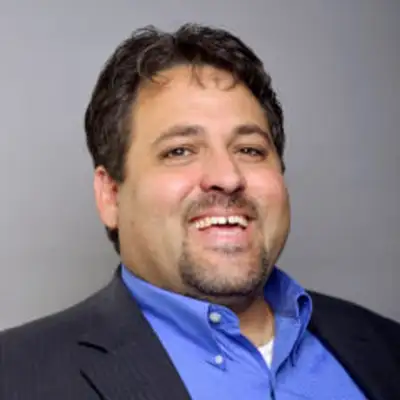
Anthony Carrano:My guest today is Shoaib Kudsi CEO of AlifCloud IT Consulting. AlifCloud is a service distributor that helps technology partners deliver AI, cloud, cybersecurity infrastructure, DevOps, managed services, and complex technical projects under their own brands without having to build large internal teams. In our conversation, Shoaib explains how Aleph Cloud IT built a partner only delivery model supported by more than 200 solution architects. We discuss how technical expertise can improve presales outcomes, why clear roles of engagement protect partner relationships, and how Microsoft partners can use assessments and specialized delivery resources to uncover new opportunities. We'll also explore Aleph Cloud IT's philosophy of commit less and deliver more, the importance of patience when building partner relationships, and why the AI era may give smaller, more agile partners an opportunity to outmaneuver much larger competitors.
Anthony Carrano:Let's welcome Shoaib to IAMCP Profiles in Partnership. Looking forward to diving in. Welcome back onto the show. It's so good to see you again.
Shoaib Kudsi:Thank you, Anthony. Likewise, it's it's a pleasure to be back on the show. Thank you for inviting.
Anthony Carrano:Yeah. Well, especially I know you're with all your world travels, it's it's it's great to great to be able to lock in this time. Now, as before we kind of get started into kind of talking about the partner story and and all the great things that you got going on, you know, like with partners and your perspectives, for those, you know, who aren't familiar with you or hadn't, you know, listened to the, you know, the the the first episode we did together, tell us a little bit about yourself and, your role, you know, in the company.
Shoaib Kudsi:Absolutely. So, Anthony, I lead the business at Alif Consulting. So I'm a CEO of the company, the founder and the CEO. And we started Alif with a vision and a mission. So I was working with one of the distributors in Middle East, and I used to manage Microsoft, close to 2,000 partners in Middle East and Africa for Microsoft.
Shoaib Kudsi:And there was a huge push from Microsoft to sell Azure, to sell Dynamics, to sell M365. But after meeting those partners, I always used to feel feel that there is a gap between the partners in the entire ecosystem, actually, because partners, they are technically not very sound. They used to say that, show them days are gone where we sell the solution on relationship. Now if I talk Azure or M365 or Dynamics, customer wants to understand what value is going to add to my company. And it means set of engineers. Correct?
Shoaib Kudsi:Like Azure have more than 50 solutions. Dynamics, it's a different world altogether. Same goes with M365 and data governance piece and now the AI piece. Now partner say that we don't have we have the relationship with the customer, but we don't have enough tech technical capabilities like the presales, the implementation, and the managed services team, and that's the reason why we always fell short in that reach.
Shoaib Kudsi:So with this vision, we started Alif. So Alif is a partner oriented company. We don't work with end customers. We only work with partners, and we work as an extended technical arm. So we have a team of more than 200 plus solution architects who work with our partners' customers directly as a white label services.
Shoaib Kudsi:So imagine, correct, like, if the partner is locally present, he know the language, he know the customer, he know the legal terms, but the only issue that we have is with delivery, and we are pioneers in delivery. So we work hand in hand, and that's where the growth engine lies.
Anthony Carrano:Mhmm. Mhmm. Excellent. And also, I know you've been recognized, you know, by IAMCP, you know, a couple times now, you know, as an APAC finalist for your P2P efforts. And so I know you guys are, you know, working with, you know, lots of partners and I know Rudy's gonna kinda start asking, you know, get into some of those questions around the story. So really, really looking forward to getting into that. Rudy.
Rudy Rodriguez:Hey, Shoaib. Good to see you again.
Shoaib Kudsi:Hey, Rudy.
Rudy Rodriguez:One of the things I wanna dive into is, you know, in the story that we're gonna tell that helped you win this award through IAMCP. Tell us a little bit about the partner that you were working with. You don't have to give us her name or but if you could share the size, the industry that they were servicing, and the technology that you helped them implement, and what were the challenges that that partner was facing?
Shoaib Kudsi:Okay, absolutely. So, Rudy, here the story was not with a partner, the story is with a distributor. We had a distributor. We are still working with them. And then, of course, Microsoft was in place.
Shoaib Kudsi:So Microsoft have planned multiple campaigns with the distributor. One was the license upgrade for M365 from a business basic business premium to E3 and E5 are the security upgrade. Second was, of course, Dynamics adoption, and third was the Azure adoption. So, I mean, of course, we collaborated with Microsoft and with the distributor. And what we did, we started M365 assessments for the partners and their customers.
Shoaib Kudsi:So we did around 200 assessments for 50 plus partners in that region, and we were able to, like, upsell 20,000 plus seats across the 200 plus customers. That includes the M365 because we also are on 20 customers, new customers on Dynamics because on Dynamics, we created custom SKU because, you know, lot of partners are not very comfortable with Dynamics, so do customers. So we created certain SKU on Business Central, and we did that vanilla flavor on the market, and we sold this to customers. And, yes, we did a lot of migrations from on prem to Azure as well. So it was a collective efforts from Microsoft, from distributor, and from us.
Shoaib Kudsi:The benefit that it added to distributor specifically was distributor like, most of the distributor, they have two arm. One is the licensing arm, and one is the services arm. So with this license upgrade, the licensing team got benefit of the upgrade, and even the service services team got the services revenue. So it was like a win win for us.
Rudy Rodriguez:Very good, very creative. Congratulations. Thank you so much. Okay. So, you know, in your whole career, what was a pivotal moment, you know, in your journey? You know, you said you were at Microsoft before that shaped how you approach partnerships today. And how would things look if that moment hadn't happened?
Shoaib Kudsi:Oh, wow. That's a very great question. So, you see, I worked with Microsoft for a while, then I'm as well. And, I mean, you know, as I told you, I used to I used to meet distributors, like, at least I used to meet around seven to 10 partners on daily basis, either on phone, either on an event. And, of course, there was a push from Microsoft to sell cloud solutions that time.
Shoaib Kudsi:It was back in 2018 where the Azure data center were just launched in UAE and South Africa. But whenever I used to go to the partner, I used to get the same story, like, are technically not capable enough. That's I mean and almost all of the Microsoft partners used to talk only on discounts in front of the customer. So we have experienced that. Imagine an AWS and a Microsoft partner sit in front of the customer.
Shoaib Kudsi:The AWS partner used to talk about technology and Microsoft partner used to talk about discount, whereas in both the technologies are great. I mean, they go hand in hand, but as the partner is technically not capable enough, most of the time the AWS used to win the deal, and that's where the idea came up that there is a missing piece in the entire ecosystem where is a which is the delivery arm, the pre sales arm, the delivery arm, the management arm. Because you know that every $1 Microsoft sell their licenses, around $8 of services revenue generated, but the partners are missing that, especially small partners. And that's where we I came up with an idea along with my business partner, Farhan, that why I mean and yes. Partners were not even comfortable to collaborate with other partners because the same partners, they also work with end customers.
Shoaib Kudsi:So it was a threat to their customer. So we created a motion where we only work with partners. We don't go with end customers, and we are we are absolutely great in delivery. So now with this with this motion in place, now we work with more than 60 partners and four distributors across the globe, and we we work as that delivery engine, and we have been growing, like, around 250% year on year in terms of partner growth and in terms of customer growth. So so that has been very fascinating and something I meet a lot of people, which is very great as well.
Shoaib Kudsi:We travel a lot. We meet a lot of people, and I think we get we have got a lot of appreciation from Microsoft itself. If you see our YouTube channel, our LinkedIn post, lot of Microsoft folks, they come and appreciate us for the work that we do. So if this would have not happened, I think the the gap of the technical arm for partners would still have been there.
Rudy Rodriguez:Very good. Very creative. I really appreciate, you know, how you came up with that, and I know how hard it is making stuff like that work. I know how hard that is. Congratulations.
Shoaib Kudsi:Yes. Thank you so much. Especially, you know, for for partners like us as I mean, I think we are the only one in the world who works in this model because there are other partners who help partners, but they also work with end customers. And we don't only help partners, you know, in terms of technical delivery. We also help them in presales to win the projects, and partners find that very helpful.
Shoaib Kudsi:Imagine imagine there is a project where the partners is not sure. They don't have a technical arm, and they don't have budget to invest in presales. So we go there, and if we win the deal, we work together. If we don't win the deal, we don't bill anything to the partner because and the partner is very happy because we don't work on hard lines with the partners, and that's what partners love the most.
Rudy Rodriguez:I have a bunch of questions around all the processes, but we're we're gonna keep moving with this interview that I I may follow-up with you. Anthony, you got some questions?
Anthony Carrano:Yeah. Absolutely. And and this might maybe tee up some of the process questions there, Rudy, but it's, you know, Shoaib, I think you I'm really curious to get your perspective on this just considering with your experience that you had, you know, like just in working with so many partners, and with what you guys do with with Alif Consulting is when you guys think about scaling, right? And the fact that, I mean, you've you've had, you know, so much growth. What's and then working with partners, what's the most overlooked lever? People, process, or technology, and why?
Shoaib Kudsi:I mean, I believe it's a combination of all, people, processes, and technology. It's a combination of the PPT model that we spoke about because I mean, see now, we we need the right people to deliver right projects. And, of course, as we work offshore remotely, processes is absolutely very keen. That's why, you know, with every partner, we align program manager that manages the partners. And, of course, technology, I still believe that, you know, a lot of partners, they claim that, you know, the the the market is crowded.
Shoaib Kudsi:We have a lot of partners. You know, there is a lot of competition, but we always speak is that if you go technology people who speak technology, who understand what customers say, customer really values that. And that's where, you know, we have been differentiator. If you see our growth, and one of the major reason behind our growth is our technical folks. Like, most 100% of our team is certified in the designation that they claim.
Shoaib Kudsi:Like, if an if it's an Azure solution architect, he would be certified in solution architecture. Same goes with Dynamics. Same goes with M365. Same goes with Azure AI or data. And most of our folks are ex Microsoft. So, I mean, it has been very easy for us when we go to a customer and then we speak technology. It's so winning that deal becomes very easy for us.
Anthony Carrano:Rudy, why don't you go ahead and ask your questions about the process? Because I think that it's because I know some that where we wanna go with some other ones, but I think this would be a great time for that.
Rudy Rodriguez:Yeah. So one the things that intrigued me was the way you said you did presales efforts with people. So how much effort is involved in that? Because you know, time is money for all of us. So how do you account for that? Which then leads, how much has that helped you and what's your close rate in regards to that?
Shoaib Kudsi:Very good, very good question, Rudy. And I think this is a unique idea that we came that we will not be charging anything for presales, anything for demos, or anything in creating the scope of work. We don't charge anything. I'll tell you how that benefited us. The very first value add or very first proportion that we have with that is, you know, we are in control of the business.
Shoaib Kudsi:We are in control of that customer right from the first call. We are in control of that customer since the conversation initiated. So that is a very positive ad for us that we control the customer right from the first conversation because lot of time it happens that the partner wins the deal and comes to us and maybe the time frame is is just undoable or maybe the project is not realistic. But offering a free presales helps us to win the deal. I mean, if we go on a presales, we at least win 70 plus percent of the deal or even more than that.
Shoaib Kudsi:So our closure ratio where we are engaged right from presales is way higher. That's the reason why we burn less in that, and we have the full control of the project because we go from the very first call.
Rudy Rodriguez:So how do you coach your partners to make sure that they bring you in at the right time, so there's not a lot of wasted effort?
Shoaib Kudsi:See, our partners happily they happily do that. In fact, we get at least four pre sales requirement daily because our partners, they they know us even if it's a new partner. We have a lot of success stories. We have a lot of credibility. If you see our LinkedIn, our YouTube, our reference channel, our IAMCP credentials. So we have a lot of credibility. So partner feels very confident taking us from the very first call because everyone understand. Correct? If you take the expert from the first call, the chances of getting the deal becomes higher because I believe the first call is very important. Because if you if you're not prepared from the very first call, I'm not sure if the customer is gonna give you a second chance to prove yourself.
Shoaib Kudsi:So so so we get a lot of requests for the first call, for the presales call, and we have delivered that.
Rudy Rodriguez:Okay. And then are most of these calls, are they done online, or do you do some of them in person?
Shoaib Kudsi:So 98% of our deliveries offshore. We do onshore as well, specifically to government projects in The US federal and government projects, but 95 to 98% of our delivery is online and customers, our partners are very happy for that.
Rudy Rodriguez:Very good. Very good. Well, it looks like you've streamlined that if you're getting that many leads per day. That's wonderful. That's wonderful. Congratulations.
Shoaib Kudsi:So thank you so much, Rudy. For us, I mean, if I tell you, there has been no day passed by where we open we get up in the morning, we open our laptop, and and there are there is no new requirements. It's either on on any of the technology. It can be resources. It can be on data governance side, but, we open a laptop. There are a couple of new opportunities. We align the team, and we go on from there.
Rudy Rodriguez:You must have a good operations person in the background to help you coordinate all that.
Shoaib Kudsi:Yes. So, I mean, see now, I personally have been in the Microsoft partner ecosystem for like more than ten years, and Alif is like in the market from like more than six years now. So we have created an ecosystem and the process in such a way that that that the team work whenever required attach the missing piece and we'll deliver that.
Rudy Rodriguez:Alright. Very good. Anthony, back to you.
Anthony Carrano:Yeah. Well, I wanna kinda just continue to piggyback a little bit on this process because I know in helping, you you talked about, like, from presales to like implementation, technical delivery. What about, do you ever help partners with like say navigating like any of the incentives and or like the Microsoft funding with some of the engagements?
Shoaib Kudsi:Yes, Anthony. We do that as a value add. We have couple of partners as well to whom we pass on the leads. They do it, and we also do it. That's not the revenue that we post for us.
Shoaib Kudsi:We only do that as a value add where we help partners to, you know, achieve the solution designation or advance specialization or to get the MCI fundings. We ourselves, we deliver a lot of MCI projects on behalf of our partners. But as I told you, we don't generate any revenue there. See, if we ease how we work, how Alif works, we work exactly as a distributor work, like how Ingram works, how TDC Next works. We work the same way, but we don't sell licenses.
Shoaib Kudsi:We work the same way in terms of delivering the services. So our growth lies in our partner's growth. So the more they grow, the more we grow. Getting these incentives, MCI funding. We also help them in marketing, generating some leads.
Shoaib Kudsi:We help them in pre sales as although all these areas are not revenue generation for us, but at the end, the more projects we get, the more grow.
Anthony Carrano:Mhmm. Mhmm. That's excellent. Well, with such, you know, streamlined processes and and just the experience, What I would like to hear is maybe can you share a time when a partnership didn't go as planned? And what did you learn about, you know, well, one, what did you learn from that experience and, you know, in particular, you know, about just resilience or leadership from that experience?
Shoaib Kudsi:There there have been occasions. There have been couple of occasions where we have experienced that. Lot of time, it happens because of two reason. One is and that's why, you know, I told you that when we go from the pre sales moment, although we burn there, but at the same time, the purpose, we have that control of that project right from the first call because lot of time partner comes up with with unrealistic expectations. Like, for example, if the partner says that, hey, we want to do this Azure migration, and we need to do it within two weeks, whereas in we are talking about 200 virtual machines that needs to go up, or maybe implement dynamics within within one month, whereas in it's a six months project.
Shoaib Kudsi:So that is an area where the partners commit something which is not realistic, then they come to us, and then they request us. Lot of time we deny, but sometimes we accept because of the relationship that we have, and that backfires to us. That is one area. Second, there are a few partners, you know, where I mean, the customer delay the project, like, one month project. It goes on for, like, four months, and the customer does not respond, is not available.
Shoaib Kudsi:But suddenly one fine day, he comes and he says that we want everything to be done today. And now now the engineers, the four engineers who was working on that project, and because because we don't we we humble to the partner that we don't charge anything for the delay work because that is done that is delayed by the customer. So we don't want to build the partner. We want to be flexible. That's the key fundamental that that we have.
Shoaib Kudsi:But at the same time, sometimes even that backfire us, then the customer comes and everything needs to be done within this next two days. Now these engineers, they are engaged on another project, then we need to do all the realignment again and get them back. So these kind of situation comes in, but we have learned over a period of time, Anthony and Rudy, that we give very clear expectations, and there have been one piece of strict advice to the team that commit less and deliver more rather than committing more and delivering less. So we have been we always commit less. Like, for example, in Azure saving, we commit that we will save around $20,000 a year and we might save $40,000 and the customer is very happy.
Shoaib Kudsi:But imagine if we say $30,000 and if we do $28,000, he's not happy. But if we commit $20,000 and if we do $30,,000 he's very happy. So our whole principle of operations is gonna be, like, commit less and and and focus on delivery so the customer and the partner both are happy.
Anthony Carrano:That's excellent. I like that. Commit less, deliver more. That's that's that's a good mantra. I'm sure that's a creates a lot of raving fans amongst your partners. That's really good.
Anthony Carrano:What you know, which I was gonna ask you, like, how do you ever get pushback from a partner whenever they they feel like you should commit more than than you are committing? I mean, what how do you like, because, you know, you're talking about managing expectations. And, I mean, I love that mantra, you know, commit less, deliver more. But how do you respond when the partner's like, oh, that's it? You know, we want more. I mean, do you ever encounter that?
Shoaib Kudsi:Not really. We see now, we we work in a market which is very mature. Like, if you talk, as I told you, 80% of our business is US and and and a lot of them come from UK and and Middle East. So we we have 99% of our partners are very mature. So whatever we tell them, they just take it.
Shoaib Kudsi:Yeah. They don't like that I mean, the commit less and deliver more mantra has come from the partners itself. Our partners don't like that we commit more and then we deliver less. So even if even if we put that buffer, like, if it's like a three months project and if we say three and a half month, they are very fine with that. This is show take four months, but don't come two months and take three months.
Shoaib Kudsi:Say four month, come it in three months, we are very happy. So our partners have been very mature, very helpful in that case. So so we have never got into a situation where they are not happy in terms of the delivery process.
Anthony Carrano:No. That's good. That's really good. Thank you. Rudy?
Rudy Rodriguez:Well, so, you know, we're living in very interesting times right now. Right? Very interesting times. And one of the big shifts that has happened this past year is AI. AI is everywhere and it's affecting, you know, how we all do business.
Rudy Rodriguez:So, you know, with AI and the automation that's completely reshaping the partner, the partner landscape, where do you see or what do you see where partners are both leveraging and or underestimating the opportunity or the risk that's out there right now?
Shoaib Kudsi:Rudy, honestly, this has been a fantastic question. And I hope I I try to justify the answer for us. So see now, it's I mean, of course, AI is proving to be or will be one of the biggest shift in the technology space, and we all are well aware about that. But I personally take it as an advantage because if you see in every era, there have been opportunity for new partners to grow, and and we have seen a lot of partners coming up from there. For example, if you see, like like, five, seven, ten years back, cloud was very new and and and there were a lot of players that came up and which prove they proved themselves.
Shoaib Kudsi:Then after cloud, data was great and lot of partners, they excel in data. I think the same is gonna happen for AI as well. Tremendous amount of opportunities are there in the market now. So imagine the partner who is not very small or who is just starting. I think this is a time where they can pick up.
Shoaib Kudsi:Like, it's not a game like only traditional and big players will survive. I think opportunities like AI, they are really helpful because it gives equal chance to the new partner as well. In fact, getting, I mean, getting the zone of AI and out outsmarting every other partner, I mean, the new partner can do it much easier as compared to the traditional partner or a big partner because a big partner, there are a lot of processes, and they are not very agile. But imagine if you are a startup, and if you're coming to this industry and if you're delivering solutions around AI where you guys are very flexible, I think the opportunities are massive. And Alif is taking that shift very positively. I mean, if you talk only about Microsoft AI, we are the partner who have delivered more than thousand solutions on Copilot. We have delivered more than 5,000 sessions or seminars on Copilot. You talk about Copilot Studio, Copilot for M, you you talk about creating custom agents on Copilot. You talk about Copilot for security. We have done big time work.
Shoaib Kudsi:In fact, we have also built a practice on AI adoption and AI security. So what we do now, we go into an enterprise or a mid enterprise on an SM account, and we grill or we do a thorough assessment on their AI strategy, AI roadmap, AI adoption, and AI security, and we give them a full proof plan, that has been proving very good for us.
Rudy Rodriguez:So, you know, you've mentioned that you you have partners in The US, The UK, The Middle East, you're all over the world. So what's the biggest cultural or operational lesson that you've learned from working with partners in different regions?
Shoaib Kudsi:Wow. So it has been fun, you know. I mean, I love working with partners, because if you with end customers, you have to get to one place, one region. But as we work with partners, we work across the globe. So a lot of positive things which we have learned specifically to The US partners.
Shoaib Kudsi:I mean, they are amazing, you know, ethically very good. They respect value. They respect talent, and they appreciate for the work that you have done. The only thing that they need is, you know, commit. I mean, deliver what you have committed, and they would be good.
Shoaib Kudsi:In terms of UK, the experience have been mixed, you know, but, of course, great learning from UK as well. South Africa or if you talk about African partners, I underestimated that big time, but they have been I mean, more than 20% of our revenue or close to 20% has been has been driven by South Africa. So that market has been very good for us and even the partners are very good. So in a nutshell, we have adopted, I mean, our tone and our behavior, not only me, the entire team's behavior changed as per the region because if you see US partners, although they are from different states, but everyone is the same, you know, with some kind of mindset. All UK partners have the same kind of mindset, all South African, and they all are very different from each other. So we have to be very cautious which partners we are working with, but I think over the period of time we have expertise in that and we have been delivering that very well.
Rudy Rodriguez:Well, that takes a lot of expertise and patience, I know it does. I know it does when you work with.
Shoaib Kudsi:Yes, it does.
Rudy Rodriguez:The cultural differences do come in, right? So they do. Kind of a follow-up to that previous question, so you know because of you know you're dealing with different people with different strengths how do you balance your own company's capabilities with the partner's strengths to ensure that the customer experiences, you know, seamless value rather than just two vendors trying to work side by side?
Shoaib Kudsi:So, Rudy, we don't go as two vendors, first of all. We only go at one vendor. So none of the customer knows who Alif is. We always go as white label. So the customer never understands that there is one more vendor.
Shoaib Kudsi:That's a collaboration because our engineer even I go on call sometime and I wear the partner's hat. And that's the reason why partners are very comfortable working with us. So for customer, it's always one vendor. And our partner, they lead the business conversations. Most of the time, we don't go into that.
Shoaib Kudsi:And our team leads the technical conversation. The partner respects that. And that's the boundary that we have maintained between both of us because we both are expertise. They are very expert in in in doing the business conversation and maintaining that relationship. We don't get into that. And we are expert in delivering solutions and they value that. That's how it it becomes very easy for us to to to get into the accounts.
Rudy Rodriguez:Okay. So, I'm going to do a little short follow-up to that because you said something real interesting, you know, that the partner handles the business side of the sale and you handle the technical side. How do you work? This is one of those process questions again. When you bring on a new partner or you're working with them for the first time, do you coach them up on that to make sure that both sides respect boundaries?
Shoaib Kudsi:I think that goes without saying. We don't coach them on that, but partners expect us to lead the technical conversation. So when the partners take our technical pre sales or our delivery head on the call, as soon as the technical conversation arise, the partner happily pass on that conversation to our team member. And imagine if any business conversation comes up, like for example, what are going to be the rates or how much time this might take or can we do it in these phases, We don't get in that conversation. We say that I think let the partner handle that.
Shoaib Kudsi:So that goes without saying we have learned over the period of time. We understand the boundary and we maintain that.
Rudy Rodriguez:Okay. And another quick follow-up. So, have you developed those rules of engagement so your team understands that, you know, what the rules of the engagement are, and also what the partner understands what the rules of engagement are? Because that's something I ran into in the past.
Shoaib Kudsi:So, our team and our partners, they both understand that. So, if it's a new partner, we become very cautious initially. So, we don't take any major step without asking the partner. So we imagine if imagine if the customer has sent our technical person an email addressing directly him, and if it's a new partner, we go to the partner and tell them we respect the customer. If he say yes, then only we respond.
Shoaib Kudsi:Otherwise, if he say no, I will take it over. We don't do that because some partners say that, hey, we don't wanna get into I mean, I'm I'm very comfortable you are looking into the account, so you lead the entire conversation. In that case, we lead that. Some partners say that I will lead the conversation.
Shoaib Kudsi:I will just let you know what needs to be done. So if it's a new partner, we don't take any aggressive decisions or we don't even respond to the customer's email unless and until we have a consent from the partner. And our team, they go if it's a new member joining, they go an extensive training because as our model is bit different from others, so our our process managers, our technical account managers, our technical team, they they go at least a week or ten days training that how we manage the account, how we deal because and it has happened in the past that, you know, small goof up creates a lot of confusion, so so we be very cautious there.
Rudy Rodriguez:Okay. Great job there. Great job. Anthony, back to you.
Anthony Carrano:Yeah. I got a very unrelated question, but I was gonna put you on the spot. So as a international traveler, which which country has the best food and why?
Shoaib Kudsi:So, Anthony, I'm very foodie. So if you talk about food, I would say Turkey. Turkey has been the best so far because as a culture, as a country, and as food, I love Turkey. And after that, I would rate UK, even UK has been amazing for me.
Anthony Carrano:What? America?
Rudy Rodriguez:I'm surprised at the second one. I'm surprised. Turkey at you. UK, that's a different one.
Anthony Carrano:Yes. That's fine.
Shoaib Kudsi:So when it comes to US, one thing which I don't like, most of The US region, they close by seven or eight, you know. So as I work from India and Dubai, we normally work late hours because we support US customers.
Anthony Carrano:Uh-huh.
Shoaib Kudsi:So our day our day starts at, like, 4PM, and we end up, like, 4AM in the morning.
Anthony Carrano:Oh, yeah.
Shoaib Kudsi:And and and we do that. And when we go to US, I mean, 8PM in San Francisco, in LA, everything is closed, and we are like, what's next?
Anthony Carrano:Yeah.
Shoaib Kudsi:So so but but, of course, I I love-
Anthony Carrano:You can only eat so many you can only eat out at so many diners, right, at, like, 02:00 in morning. So I get it. I get it.
Rudy Rodriguez:You you can't always eat at the Waffle House. It's open twenty four hours.
Anthony Carrano:You know, I'll I'll that's what I was gonna say, but I wasn't gonna call them out by name here on the podcast.
Rudy Rodriguez:They are open twenty four hours, so I have to they open twenty four hours.
Anthony Carrano:And it's fine that you mentioned Turkey because my my oldest son who just graduated, he did a he did almost like a month long trip throughout, like, Italy, Greece, and and Turkey. And he he went on and on and on about Turkey. He really, really enjoyed it. So that's I know I've it's been a country I've actually wanted to to go visit just because of the just the the cultural history as the cross section between Europe, Asia, and Africa. And so I'll have to hit you up for some ideas whenever I make that trip.
Shoaib Kudsi:Absolutely.
Anthony Carrano:Let me ask you this then. So you've got just a, you know, a great perspective on on on partnering, and I really just value, you know, just your insights and what you what you've been able to share. So if another partner listening today wanted to kinda replicate, you know, your success, maybe not necessarily like your business model per se, but just think of it from and how you work with and through partners, through that context, what's maybe one principle or mindset shift you tell them to adopt first?
Shoaib Kudsi:Patience. I think a lot of patience who are in the partner ecosystem because, you know, now as you are not maintaining the customers directly, you have to be very patient. So many a times it will happen that you're going on the pre sales call, deals are not coming up, partners are squeezing you for budgets because it's your price, then the partner price, and then it goes to the customer. So if someone would like to adopt the model, I think patience is the key to success.
Anthony Carrano:That's good. And it's a virtue. That's for sure. Well, excellent. Well, as we kinda get close to wrapping up, I know we were chatting a little bit about some, know, obviously, you know, one of the other things you guys provide in addition to presales, to implementation, all the delivery, navigating the funding, but you also provide a set of assessments.
Anthony Carrano:Maybe could you tell us a little bit about one that really, you know, make it available for the partners that are listening?
Shoaib Kudsi:Absolutely. Absolutely, Anthony. I think assessment has been the key for our success because assessments, they don't only get us new opportunities, but they also open the door for a lot of new customers. So we have we have couple of awesome tools that we have built in house, and we use some third party tools as well. So we do a thorough assessment for the customers on M365 in terms of security, their licensing, is the M365 setup as per HIPAA, as per GCCI, as per CMMC.
Shoaib Kudsi:What is their spot? And then we give a report card that where what they are and where they should be. Same goes with Azure. We do a lot of AI readiness assessment. So we do AI readiness assessment.
Shoaib Kudsi:We do AI security assessment. We do an AI adoption plan. So these assessment so this help partners getting new deals from the existing customers, getting into new customers account. At the same time, it becomes a great value to the customers. So so we offer this to our partners and their customers, and I think it's gonna be a really good starting for point for them to get into new accounts.
Anthony Carrano:Mhmm. And a lot of those assessments for those that are listening can be found actually on health consulting's website. And we'll have the link in the show notes. Looks like there's, know, almost about, you know, there's about, I think almost a dozen different assessments that are available. We'll have those links in the show notes there.
Anthony Carrano:That being said, what are some of the best ways for folks that are listening to reach out and connect with you?
Shoaib Kudsi:Of course, our team is very, very active on on LinkedIn. We respond to email very fast. So, yes, just shoot us an email or drop us an message on LinkedIn, or I will also give the email addresses of our accounts, our project managers. Just just drop an email to them, and you will be listening from us very soon.
Anthony Carrano:Shoaib, it was great seeing you again. It's always a a treat to kinda get your perspective, and keep up the great work.
Shoaib Kudsi:Thank you so much, Anthony and Rudy. It's it's really a pleasure being on on the show talking to you guys, and I really appreciate you guys taking up the time and and hosting me here.
Anthony Carrano:Sounds good. Take care.
Rudy Rodriguez:Been great. Thank you. Bye.
Anthony Carrano:Well, that was a great episode. I really enjoyed having Shoaib, you know, back on the show. You know, it was really fascinating just to get his perspective on working with partners and just the thing that a theme that kept coming up over and over again just with the success he's had with partners is the word expectations. And I really like the mantra that they have, you know, that they share internally and that they as a value that they live by to, you know, commit less, but deliver more. And just to create, you know, that that type of a raving fan experience, you know, for their partners and ultimately, you know, their customers.
Anthony Carrano:How about you? What are some things that stood out to you, Rudy?
Rudy Rodriguez:Well, I really enjoyed the conversation with Shoaib. And one of the things that we learned on this episode was, you know, how he built his business model, which was really interesting having worked at Microsoft, but also how he's been able to build the technical depth of the organization to support the business model that they have of just working through partners not selling direct, and how they have approximately 200 certified or credentialed architects on their team. That's really substantial depth to do it. And then the business processes that they did. So got into a little bit on the rules of engagement, but he puts his people through a week to ten days worth of training when his technical team comes on board to teach them how to work with and through partners.
Rudy Rodriguez:And that's really important to partners and the fact that they have a series of assessments that they do, that they go on qualification or discovery calls with partners to help the partners establish their technical depth and then the processes that they have, like the assessments that they offer free of charge, to start delivering value immediately. I found that really interesting, really, really interesting, is that, you know, how they continue to develop their processes to help partners.
Anthony Carrano:And also, you know, just some piggybacking off that, you know, when he talked about, yes, having that technical depth, those processes, that value around the increasing expectations, but thought it was interesting that he mentioned one of the keys, you know, to like, if you want to replicate success in working with partners is patience. And I think a lot of times that's one of the things that's often overlooked because, you know, we wanna try and generate results yesterday, you know, but the key is in, you know, being methodical and having patience and developing it out the right way. So I really appreciated what he had to say about that. That's a cultural difference in having that much patience. I will say that.
Anthony Carrano:Yeah.
Rudy Rodriguez:Well, it's different in The US. We get raised in, as Michael Dell once told me, they didn't have patience because we work on 4 13 Week Years. And that's a US model, is we work on quarters and the responsibilities each one. And it's hard to have patience. Having run a large organization, I truly understand that also well. But you do have to have it. And as a leader, you have to have that and not let that overwhelm you. So that's really good.
Rudy Rodriguez:So I want to thank all of you for joining us on this episode today of IAMCP Profiles in Partnership powered by Dunamis Marketing. We hope you enjoyed this podcast. We know we certainly did. And we hope you found it useful and inspiring.
Rudy Rodriguez:If you did, please subscribe, rate, and review us on your favorite podcast platform. One of the best ways to partner for success is to join IAMCP, a community of Microsoft partners who help each other grow and thrive. IAMCP members can find and connect with other partners locally and globally and access exclusive resources and opportunities. Whether you're looking for new customers, new markets, or new solutions, IAMCP can help you achieve your goals. To learn more, visit the website at www.iamcp.org.